
Root Canal Treatment: Is It Painful? Steps, Cost & Recovery
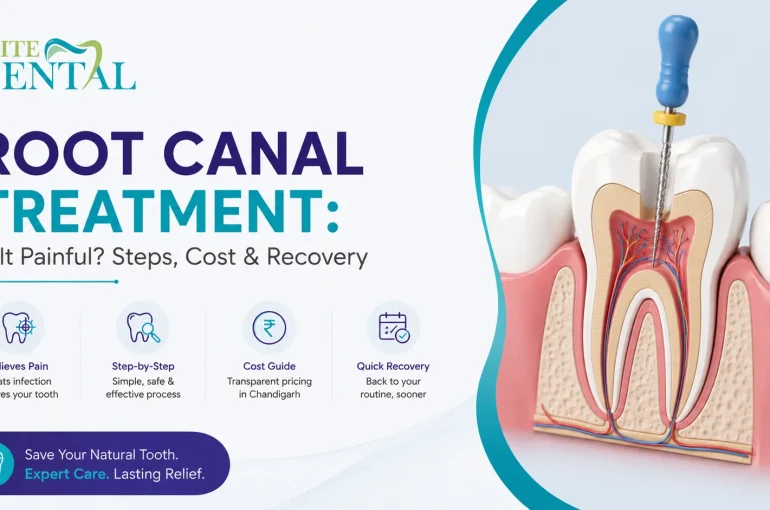
The moment a dentist says “root canal treatment,” most patients feel a wave of anxiety, even before understanding what the procedure actually involves. In reality, modern root canal treatment is far less daunting than its reputation suggests. Performed under local anaesthesia, today’s RCT is a routine, largely painless procedure that saves severely infected or damaged teeth.
This guide covers everything you need to know, from the actual steps involved to recovery, cost factors, and when to consult the best dentist for RCT in Chandigarh.
Root Canal Treatment: What It Is and When It Is Needed
Root canal treatment, also called endodontic therapy, is a procedure used to treat infection or damage inside the pulp of a tooth. The pulp is the soft inner layer containing nerves, blood vessels, and connective tissue.
When the pulp becomes infected or inflamed due to deep decay, trauma, or a cracked filling, it cannot heal on its own. Left untreated, the infection spreads and can lead to abscess formation, bone loss, and eventual tooth loss.
A root canal becomes necessary when you experience:
- Severe, persistent toothache — especially while biting or chewing
- Prolonged sensitivity to hot or cold that does not fade quickly
- Swelling, tenderness, or a pimple-like bump on the gum near a tooth
- Deep decay reaching close to or into the pulp
- A cracked filling or trauma that has exposed the inner tooth layers
- Darkening or discolouration of a tooth without obvious external cause
Catching these signs early and consulting the best dentist for RCT makes the procedure simpler and the outcome far better.
Root Canal Treatment Steps: A Simple Walkthrough
Understanding the steps of root canal treatment takes away much of the fear associated with it. Here is what happens during the procedure:
Step 1: Diagnosis and X-Ray
The dentist takes a digital X-ray to assess the extent of infection, the shape of the root canals, and any involvement of surrounding bone. This guides the entire treatment plan.
Step 2: Local Anaesthesia
The area around the affected tooth is numbed completely using local anaesthesia. This is the step that separates modern root canal treatment from the painful experience of the past. Most patients feel nothing beyond mild pressure during the procedure.
Step 3: Pulp Removal and Canal Cleaning
A small access opening is made through the crown of the tooth. The infected or inflamed pulp is carefully removed. The canals are then shaped and cleaned using fine rotary instruments and disinfecting solutions.
Step 4: Filling the Canals
Once the canals are clean and dry, they are filled with a biocompatible rubber-like material called gutta-percha. This seals the canals permanently to prevent future infection.
Step 5: Crown Placement
A dental crown is placed over the treated tooth to restore its strength and function. This is essential, a tooth without a crown after root canal treatment is vulnerable to fracture and may fail over time.
Single-Sitting RCT: Faster Treatment, Same Quality
Single-sitting RCT allows the entire root canal procedure to be completed in one appointment rather than over multiple visits. Advances in rotary endodontic instruments and improved irrigating solutions have made this both safe and effective for most cases.
Here is when single-sitting RCT is appropriate:
- Teeth with straightforward canal anatomy
- Cases without severe, spreading infection or sinus tract involvement
- Patients who have limited availability for multiple appointments
Multi-sitting RCT is still recommended for complex cases involving curved or calcified canals, active abscess, or teeth requiring retreatment. Your dentist will advise the best approach based on your individual case.
Root Canal Treatment and Pain: Setting the Record Straight
The most common concern about root canal treatment is pain. Here is the truth: the procedure itself is not painful when performed under proper anaesthesia.
What patients may actually experience:
- During the procedure: Pressure and vibration from instruments; not pain. If any discomfort is felt, the dentist adjusts the anaesthesia immediately.
- After the procedure: Mild soreness or tenderness for 2 to 5 days. This is normal tissue response and is managed with prescribed pain relievers.
- Long-term: The original toothache caused by the infection is completely relieved once the infected pulp is removed.
In short, root canal treatment relieves pain more than it causes it.
Recovery After Root Canal Treatment: What to Expect
Recovery after root canal treatment is generally straightforward. Most patients return to normal activities the same day or the next morning.
Follow these post-treatment care tips for a smooth recovery:
- Avoid chewing on the treated side until the crown is placed
- Take prescribed antibiotics and pain medication as directed
- Eat soft foods for the first 2 to 3 days post-procedure
- Maintain regular brushing and flossing, being gentle around the treated area
- Avoid very hot, cold, or hard foods immediately after treatment
- Attend your follow-up appointment for crown placement without delay
Swelling or pain that worsens after 3 to 4 days, or fever, should be reported to your dentist immediately as these may indicate complications.
Root Canal Treatment Cost: Key Factors That Affect the Price
The cost of root canal treatment in Chandigarh varies based on several clinical and technical factors. There is no single fixed price, your dentist will give an estimate after assessing your specific case.
Factors that influence RCT cost include:
- Tooth position: Front teeth (single canal) are generally simpler and less expensive than molars, which have 3 to 4 canals
- Single-sitting vs. multi-sitting RCT: Single-sitting RCT may have a different pricing structure depending on case complexity
- Severity of infection: More advanced infections requiring additional cleaning, medication, or retreatment add to the overall cost
- Crown type: Ceramic, PFM, or zirconia crowns placed post-RCT each have different price points
- Diagnostic costs: Digital X-rays or CBCT scans required for complex cases may be factored in
Always get a clear treatment plan and cost breakdown before proceeding. A trusted clinic will never hide costs or recommend unnecessary procedures.
Best Dentist for RCT in Chandigarh: Elite Dental Hub
If you are looking for the best dentist for RCT in Chandigarh, Elite Dental Hub in Sector 19A is a trusted name in the city. The clinic uses rotary endodontic technology for faster, more precise canal cleaning, significantly reducing treatment time and patient discomfort.
Led by Dr. Swati Narang Kaushik, the team has extensive experience in both single-sitting RCT and complex multi-visit cases. Every root canal treatment at Elite Dental Hub begins with a thorough digital X-ray assessment, followed by a clear explanation of the diagnosis, treatment steps, and expected outcomes.
The clinic follows a four-stage sterilisation protocol and strictly uses single-use endodontic files, ensuring your safety at every step of the procedure.
Tooth Pain Bothering You? Book Your RCT Consultation Today
Do not wait for the pain to worsen. A timely root canal treatment saves your tooth, relieves infection, and ends the discomfort for good. At Elite Dental Hub, our specialists make the process as comfortable and stress-free as possible, from diagnosis to crown placement.
Address: House No. 5, Sector 19A, Opposite HDFC Bank, Chandigarh — 160019
Clinic Hours: Monday to Saturday | 10:30 AM – 8:00 PM
Conclusion
Root canal treatment has a reputation it no longer deserves. With modern techniques, rotary instruments, and skilled hands, the procedure is comfortable, efficient, and tooth-saving. Whether it is a severe infection, deep decay or a cracked filling that has reached the pulp, RCT is often the best way to preserve your natural tooth.
Recovery is quick, results are long-lasting, and the relief from that persistent toothache is immediate. If you need a trusted best dentist for RCT in Chandigarh, reach out to Elite Dental Hub and take the first step towards a healthier, pain-free smile.
Frequently Asked Questions
Is root canal treatment painful?
Root canal treatment is performed under local anaesthesia and is not painful during the procedure. Mild soreness may last 2 to 5 days post-treatment and is easily managed with prescribed medication.
How many sittings does root canal treatment take?
Most cases can be completed in one to three sittings. Single-sitting RCT is possible for straightforward cases. Complex canals, severe infections, or retreatment cases may require multiple appointments.
Can a cracked filling lead to a root canal?
Yes. A cracked filling can expose the inner tooth to bacteria, leading to pulp infection over time. If left untreated, this may progress to the point where root canal treatment becomes necessary.
How long does recovery after RCT take?
Most patients recover within 2 to 5 days after root canal treatment. Mild tenderness is normal. Full recovery and restored function occur once the dental crown is placed over the treated tooth.
What happens if root canal treatment is delayed?
Delaying root canal treatment allows the infection to spread to surrounding bone and teeth, causing abscess, swelling, and eventual tooth loss. Early treatment leads to far better outcomes and lower overall cost.
Does a tooth need a crown after root canal treatment?
Yes. A crown is strongly recommended after root canal treatment to protect the tooth from fracture. A treated tooth is more brittle and prone to cracking without a crown, especially back teeth under chewing pressure.
Tags:
Search
Categories
Archives
Tags
Recent Posts
- Painless & Single-Sitting Root Canal in Chandigarh
- Sedation & Painless Dentistry: Is It Right for Anxious Patients?
- Missing a Tooth? Implant vs Bridge vs Denture Compared
- Dental Cavity: Causes, Warning Signs & How to Prevent Tooth Decay
- Cosmetic Dentistry in Chandigarh: Options, Costs & What to Expect

