
Dental Cavity: Causes, Warning Signs & How to Prevent Tooth Decay
Dental Cavity: Causes, Warning Signs & How to Prevent Tooth Decay
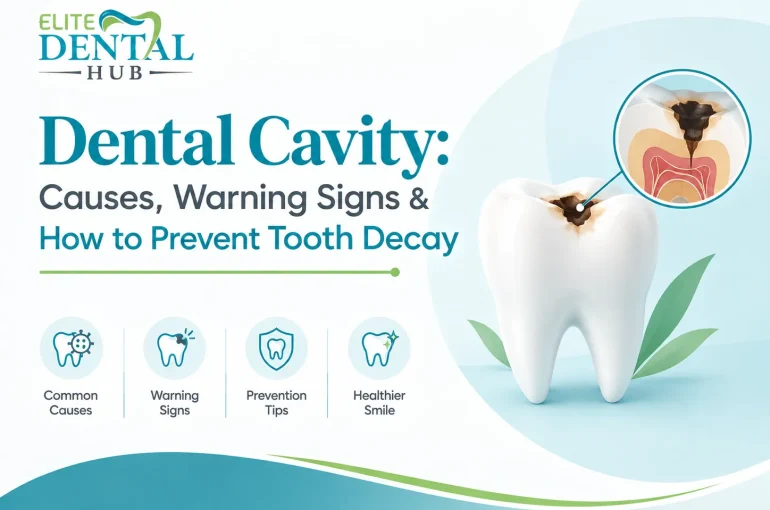
A dental cavity rarely announces itself. It begins as a tiny soft patch on the enamel. By the time you feel a twinge, the damage has usually travelled deeper into the tooth.
Tooth decay is one of the most common health problems in India. Reviews of Indian survey data suggest most adults experience it at some stage.
The good news is reassuring. A dental cavity is largely preventable, and very treatable when caught early. This guide covers the causes, the warning signs and the habits that protect your teeth.
Dental Cavity Explained in Simple Terms
A dental cavity is a permanent hole in the hard outer surface of a tooth. Dentists call it dental caries. It forms when acid slowly dissolves the minerals in your enamel.
Your mouth naturally holds bacteria. When you eat sugar or refined carbohydrates, they feed on it and release acid.
That acid pulls calcium and phosphate out of the enamel. Saliva repairs a good deal of this damage every single day. When acid attacks become too frequent, repair cannot keep pace, and a dental cavity begins to form.
So a dental cavity never appears overnight. It is the end result of many small acid attacks over months or years.
The Role of Dental Plaque in Tooth Decay
Dental plaque is the soft, sticky and almost colourless film that settles on teeth within hours of brushing. It holds bacteria tightly against the enamel and traps acid right at the tooth surface.
- Dental plaque hardens into tartar in a couple of days if it is not removed
- Tartar cannot be brushed away and needs a professional dental cleaning
- Removing dental plaque daily is your strongest defence against tooth decay
Dental Cavity Causes That Are Easy to Overlook
Most people blame sweets alone. In reality, several dental cavity cause work together. Knowing the common dental cavity helps you fix the habit that actually matters.
- Frequent snacking: How often you eat sugar matters more than how much. Every snack restarts the acid attack.
- Sticky and refined foods: Biscuits, chips, dried fruit and white bread cling to teeth far longer than you expect.
- Sugary drinks: Soft drinks, packaged juices and sweetened tea keep the enamel bathed in sugar and acid.
- Incomplete brushing: Missing the back molars and the gumline leaves dental plaque exactly where decay starts.
- Skipping floss: Decay between two teeth is common, because a brush simply cannot reach there.
- Dry mouth: Less saliva means less natural repair. Some medicines and mouth breathing reduce saliva flow.
- Deep grooves in molars: Narrow pits trap food particles and are difficult to clean properly.
- Receding gums: Exposed root surfaces are softer than enamel, so they decay faster.
Children and older adults carry the highest risk. Both groups often have thinner protective enamel and find thorough cleaning harder.
Most dental cavities trace back to two things. How often sugar reaches your teeth, and how well dental plaque is cleaned away.
Warning Signs of a Dental Cavity
Early decay is silent. That is precisely why routine check-ups catch trouble long before pain does.
Early Signs Worth Noticing
- A chalky white spot on the enamel, which signals mineral loss
- Mild sensitivity to cold water, ice cream or sweets
- Food getting stuck in the same spot again and again
At this stage a dental cavity has not fully formed. Fluoride and better cleaning can often reverse the damage, which is dental cavity prevention at its simplest.
Advanced Signs That Need Prompt Care
- A visible brown or black spot, or a small hole in the tooth
- Pain that lingers after hot, cold or sweet food
- Discomfort while biting down
- Swelling or throbbing pain, which suggests the nerve is involved
Swelling and throbbing pain are dental emergencies. Waiting at this point usually means losing more tooth structure to the dental cavity.
Stages of Tooth Decay from Enamel to Pulp
Tooth decay moves through clear stages. Each stage is harder to treat than the one before.
- Demineralisation: Minerals leach out and a white spot appears. This stage is reversible.
- Enamel decay: The surface breaks and a small hole forms. A composite restoration is now needed.
- Dentine decay: Decay reaches the softer layer beneath and spreads faster. Sensitivity becomes obvious.
- Pulp involvement: Bacteria reach the nerve. Root canal treatment is usually required.
- Abscess: Infection spreads to the bone around the root, bringing swelling and severe pain.
Every stage costs more time and more natural tooth structure. That single fact is the strongest argument for treating a dental cavity early.
Dental Cavity Treatment Options Explained
Treatment depends entirely on how deep the decay has travelled. Your dentist confirms this with a clinical examination and an X-ray.
Fluoride and Preventive Care for Early Decay
If only the enamel has softened, professional fluoride, sealants and better home care may be enough. No drilling is involved, and tooth decay can still be stopped.
Composite Restoration for Small and Moderate Cavities
A composite restoration is the most common treatment for a dental cavity. The decayed portion is removed, the area is cleaned, and a tooth-coloured resin is bonded in place and set with a curing light.
- Matches the natural shade of your tooth
- Bonds directly to the tooth, so less healthy structure is removed
- Finished in a single sitting for most cavities
A composite restoration also seals the cleaned surface, which keeps dental plaque out of the repaired area.
Clinics offering cavity removal in Chandigarh, including Elite Dental Hub, use magnification and careful isolation so decay removal stays precise and comfortable.
Crowns and Root Canal Treatment for Deep Decay
When a large portion of the tooth is lost, a crown restores its strength. If bacteria have reached the pulp, root canal treatment removes the infected tissue and saves the natural tooth.
Dental Cavity Prevention Habits That Actually Work
Good dental cavity prevention is not complicated. It only asks for consistency.
- Brush twice a day for two full minutes with fluoride toothpaste
- Spit after brushing and avoid rinsing at once, so fluoride stays on the teeth
- Clean between the teeth daily with floss or interdental brushes
- Reduce how often you snack, not just what you snack on
- Choose plain water over soft drinks and sweetened beverages
- Enjoy sweets along with a meal instead of nibbling through the day
Book a professional cleaning and dental check-up twice a year
Extra Protection for Children
- Never put a child to bed with a milk bottle
- Ask your pediatric dentist about pit and fissure sealants for new molars
These steps protect existing fillings too. A composite restoration lasts for years when the tooth around it stays clean.
Steady dental cavity prevention always takes less time than treating tooth decay later.
Protect Your Smile Before a Dental Cavity Turns Into Root Canal Treatment
A short examination today can spare you a long appointment later. At Elite Dental Hub in Sector 19A, Chandigarh, our team checks for early decay, explains what we find, and treats only what needs treating.
- Early detection and gentle cavity removal in Chandigarh
- Comfortable, single-sitting composite restoration
- Gentle care for anxious patients and young children
If you have been searching for cavity removal in Chandigarh, a simple check-up is the right starting point. Call us or book online, and let us check that sensitive tooth before it starts hurting.
Small Habits That Keep a Dental Cavity Away
A dental cavity develops slowly and quietly, which is exactly why it catches people by surprise. Controlling dental plaque, cutting down on frequent sugar and keeping up with check-ups handles most dental cavity causes.
If you have noticed sensitivity, a dark spot or food trapping in one place, do not wait for pain. Early treatment is simpler, quicker and kinder to your tooth.
Frequently Asked Questions
1.Can a dental cavity heal on its own?
Only the earliest stage can. A white spot may remineralise with fluoride and better cleaning. Once a hole forms in the enamel, a filling becomes necessary.
2.How long does a dental cavity take to form?
It varies a lot. Enamel decay often takes months to years, though frequent sugar, dry mouth and poor cleaning can speed up the process considerably.
3.Is cavity removal painful?
No. Local anaesthesia keeps the procedure comfortable and most patients feel only mild pressure. Cavity removal in Chandigarh clinics is routinely completed within a single sitting.
4.Does a dental cavity always cause pain?
No. Early tooth decay is usually painless. Pain appears only once decay reaches the dentine or the nerve, which is why regular check-ups matter so much.
5.How long does a composite restoration last?
With good oral hygiene, a composite restoration commonly lasts several years. Its lifespan depends on cavity size, bite forces and how well you control dental plaque.
6.Can brushing alone prevent tooth decay?
Brushing helps, but it is not enough on its own. Flossing, fluoride, limited sugar frequency and professional cleaning together give the strongest dental cavity prevention.

