
Clear Aligners vs Braces: Cost, Time & How to Choose
Clear Aligners vs Braces: Cost, Time & How to Choose
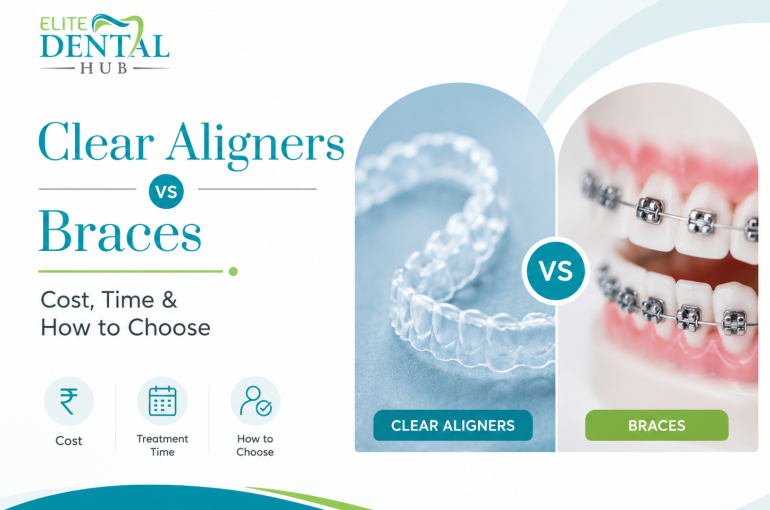
Thinking about straightening your teeth? The two most popular options today are dental aligners and traditional braces and both can deliver excellent results. The right choice, however, depends on your specific case, lifestyle, budget, and how quickly you need results. Clear teeth aligners have grown enormously in popularity over the last decade because of their comfort and discretion. But braces still hold their ground for complex corrections.
This guide breaks down the differences clearly from how each system works to cost, treatment time, and who each option is best suited for.
Dental Aligners and Braces: Understanding How Each System Works
Before comparing cost and time, it helps to understand what each treatment actually involves.
Traditional Braces
Traditional braces use a system of metal or ceramic brackets bonded directly to each tooth, connected by an archwire. The wire applies consistent pressure to gradually shift teeth into the desired position. Your orthodontist adjusts the wire at regular intervals — typically every 4 to 6 weeks to maintain controlled movement.
Braces are fixed, they stay on your teeth 24/7 throughout the entire treatment period. They are:
- Highly effective for complex cases, severe crowding, significant bite issues, rotations, and vertical tooth movement
- Available in metal or ceramic, ceramic braces are tooth-coloured and more aesthetic than metal ones
- Not removable, which is both an advantage (consistent force) and a limitation (eating restrictions, cleaning challenges)
Dental Aligners
Dental aligners, also called clear teeth aligners, are custom-fabricated, removable trays made from medical-grade transparent plastic. Each tray is worn for 1 to 2 weeks and applies precise, programmed pressure to specific teeth. As you progress through the series of trays, your teeth gradually shift into alignment.
Key features of dental aligners:
- Virtually invisible: no brackets or wires visible when worn
- Removable: taken out for eating, drinking anything other than water, brushing, and flossing
- Comfortable: no metal edges or wire poking into the cheeks or lips
- Requires discipline: must be worn for 20 to 22 hours per day for results to stay on track
Invisalign Teeth and SureSmile Aligners: Leading Clear Aligner Systems
Not all clear teeth aligners are created equal. The two most clinically established systems available today are:
Invisalign Teeth
Invisalign teeth alignment is the world’s most widely used clear aligner system, with over 16 million patients treated globally. It uses SmartTrack material — a proprietary multi-layer polymer — that is engineered for consistent, controlled tooth movement. Invisalign uses SmartForce attachments (small tooth-coloured buttons) and precision bite ramps to handle complex movements that earlier aligner generations could not achieve.
- Best for: Mild to moderate misalignment, spacing, and bite corrections
- Monitoring: Digital 3D treatment planning with a projected outcome shown before treatment begins
- Refinements: Additional trays can be ordered if teeth need further fine-tuning after the initial series
SureSmile Aligners
SureSmile aligners use advanced 3D digital scanning and robotic wire-bending technology (for the braces version) combined with AI-driven treatment planning. The SureSmile clear aligner system is gaining strong clinical traction in India and offers a competitive alternative to Invisalign with comparable outcomes in many case types.
- Best for: Mild to complex misalignment managed through digital precision planning
- Advantage: High accuracy in tooth movement sequencing due to AI-driven case planning
- Availability: Offered at select advanced dental clinics in India, including in Chandigarh
Both Invisalign teeth and SureSmile aligners require a certified dentist. Always confirm your dentist’s training and credentials with the specific aligner system before beginning treatment.
Dental Aligners vs Braces: Cost Factors to Consider
The cost of dental aligners versus braces in Chandigarh depends on several clinical and system-specific factors. There is no single price, every case is assessed individually. Here is what drives the cost difference:
Factors That Affect Aligner Cost
- Case complexity: Mild spacing or crowding requires fewer trays and costs less; moderate-to-complex cases need more trays and advanced features like attachments
- Aligner brand: Premium systems like Invisalign and SureSmile are priced differently from entry-level aligner brands due to clinical data, material quality, and tech investment
- Number of arches: Treating both upper and lower teeth costs more than treating a single arch
- Refinements: Additional trays required after the initial series may be included in the package or charged separately
Factors That Affect Braces Cost
- Bracket material: Ceramic braces are costlier than standard metal brackets but offer better aesthetics
- Treatment duration: Longer treatment means more follow-up appointments, which may affect the overall cost depending on the clinic’s pricing model
- Complexity of movement required: Simple spacing corrections cost less than correcting significant skeletal or bite discrepancies
In general, clear teeth aligners from premium systems tend to cost more than metal braces, but are often comparable to ceramic braces. Always get a detailed, itemised cost breakdown before starting any orthodontic treatment.
Dental Aligners vs Braces: Treatment Duration
Treatment time varies significantly based on the complexity of the case, not just the system used. Here is a general overview:
- Mild cases with dental aligners: As short as 6 to 12 months for simple spacing or crowding corrections
- Moderate to complex aligner cases: Typically 12 to 24 months, sometimes longer with refinement trays
- Traditional braces (average): Most cases are completed in 18 to 24 months; complex orthodontic corrections may take up to 36 months
- One important consideration: tooth aligners only work if worn consistently for 20 to 22 hours per day. Patients who frequently remove their trays will experience delays in treatment progress.
Dental Aligners or Braces: Choosing the Right Treatment for You
Both options can create excellent outcomes. The best choice depends on your clinical condition and personal priorities. Here is a practical guide:
Choose Clear Teeth Aligners If:
- Aesthetics during treatment are a priority, a wedding, job, or personal reason
- You have mild to moderate crowding, spacing, or bite issues
- You are disciplined about wearing the trays consistently every day
- You want to remove your appliance for meals and oral hygiene without any restriction
- You prefer fewer in-clinic visits during treatment
Choose Braces If:
- Your case involves severe crowding, significant rotations, or bite correction
- You are concerned about forgetting to wear removable trays
- You want a more economical option without compromising clinical outcome
- Your dentist or orthodontist recommends braces as the more appropriate system for your case
No online guide can replace an in-person orthodontic assessment. A proper clinical evaluation, including X-rays, models, and bite analysis, is the only reliable way to determine which system is truly right for your teeth.\
Dental Aligners and Braces at Elite Dental Hub, Chandigarh
At Elite Dental Hub in Sector 19A, Chandigarh, both dental aligners and braces are offered as part of a comprehensive orthodontic treatment portfolio. The team is experienced in working with leading clear aligner systems including Invisalign teeth and SureSmile aligners and uses digital scanning for precise treatment planning.
Led by Dr. Swati Narang Kaushik, the clinic takes an honest, case-first approach recommending the system that is most appropriate for your teeth, not the most expensive option. Whether you are exploring clear teeth aligners for the first time or already know you want braces, you will receive a thorough assessment and a transparent treatment plan.
Start Your Orthodontic Journey — Book a Consultation Today
Still unsure whether dental aligners or braces are right for you? Let our team at Elite Dental Hub assess your teeth and give you a clear, honest recommendation with a full cost estimate and treatment timeline. No pressure. Just clarity.
Conclusion
Dental aligners and braces are both effective orthodontic solutions but they serve different needs. Clear teeth aligners offer discretion, comfort, and flexibility. Braces offer consistent, reliable force for more complex corrections. Neither is universally better. The right choice is the one that suits your case, your lifestyle, and your commitment.
Whether you choose Invisalign teeth, SureSmile aligners, or traditional braces the most important step is getting a thorough orthodontic assessment from a qualified, experienced provider. A straighter smile is well within reach. Start with the right information and the right team.
Frequently Asked Questions
Are dental aligners as effective as braces?
Dental aligners are equally effective for mild to moderate cases. For complex bite correction or severe crowding, braces may be more appropriate. Your orthodontist will confirm which system best suits your case.
How long do clear teeth aligners take to show results?
Clear teeth aligners can show visible improvement within 2 to 3 months. Full treatment typically takes 6 to 24 months depending on case complexity and how consistently the trays are worn daily.
Are Invisalign teeth aligners better than SureSmile?
Both Invisalign teeth and SureSmile aligners deliver excellent outcomes with proper case selection. The better option depends on your clinical needs, your provider’s expertise, and the system they are certified to use.
Can tooth aligners fix overbite or underbite?
Tooth aligners including Invisalign can correct mild to moderate overbites, underbites, and crossbites. Severe skeletal discrepancies may require braces combined with additional orthodontic appliances or surgery.
How many hours a day must dental aligners be worn?
Dental aligners must be worn for 20 to 22 hours per day. They are only removed for eating, drinking, brushing, and flossing. Wearing them for fewer hours delays treatment and compromises results.
Are clear teeth aligners painful?
Clear teeth aligners cause mild pressure and discomfort for the first 1 to 2 days of each new tray. This is normal and indicates active tooth movement. The discomfort is generally milder than the soreness experienced with braces adjustments.

