
Painless & Single-Sitting Root Canal in Chandigarh
Painless & Single-Sitting Root Canal in Chandigarh
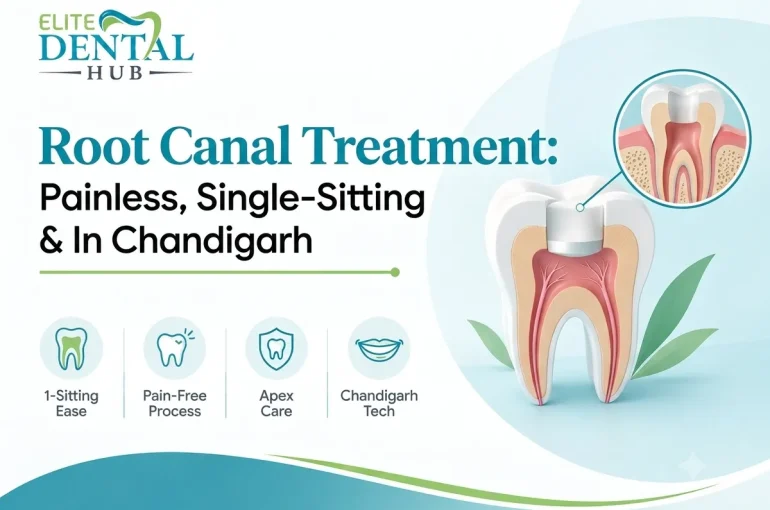
A deep toothache, swelling, or lingering sensitivity to hot and cold foods often signals that bacteria have reached the inner pulp of your tooth. For years, patients delayed treatment out of fear that root canals were lengthy or painful. Modern advancements in endodontic technology now make getting a painless RCT in Chandigarh a fast, stress-free, and highly comfortable experience.
Opting for an advanced single sitting RCT allows busy working professionals and families across the Tricity to save their natural dentition in just one clinical appointment. A dedicated root canal specialist in Chandigarh utilizes digital apex locators, high-torque rotary endodontics, and effective local anesthesia to eliminate active dental infection. Saving your natural tooth preserves your bite alignment, prevents jawbone deterioration, and restores complete chewing efficiency.
Painless RCT in Chandigarh: Natural Tooth Preservation
Inside every natural tooth lies the dental pulp, a vascular network of sensitive nerves and blood vessels. When deep decay, hairline enamel cracks, or dental trauma expose this pulp to oral bacteria, the tissue becomes inflamed and infected. Rather than undergoing a permanent extraction that leaves an empty gap, a painless root canal treatment removes the infected pulp tissue while keeping your original tooth root intact.
Receiving a painless RCT in Chandigarh stops infection from spreading into the surrounding jawbone and facial spaces. During the procedure, the diseased pulp is cleared, the narrow root canals are disinfected thoroughly, and the interior space is sealed with a biocompatible filling material known as gutta-percha. This approach relieves throbbing dental pain immediately while preserving the structural strength of your natural tooth.
Clinical Benefits of Modern Single-Sitting Endodontics
Technological advancements have transformed endodontic care from multi-week appointments into a streamlined single-visit procedure for suitable cases.
- Reduced Treatment Duration: Completing the entire cleaning, shaping, and canal obturation in a single appointment of 45 to 60 minutes saves valuable time.
- Lower Risk of Inter-Appointment Contamination: Sealing the root canals in one visit prevents saliva leakage or temporary filling loss between appointments.
- Immediate Pain Relief: Removing the inflamed nerve tissue completely in one sitting provides rapid relief from throbbing toothaches and localized pressure.
- Single Dose of Anesthesia: Patients undergo local numbing only once, eliminating the need for repeated needle pricks and multiple post-numb recovery periods.
Step-by-Step Procedure for a Modern Painless Root Canal Treatment
Under the care of an experienced endodontist, endodontic therapy follows an exact sequence designed around patient comfort and microbial elimination.
Digital Radiographic Diagnosis and Pulp Assessment
The specialist begins with digital X-rays and high-resolution intraoral imaging to examine root canal curvature, calculate bone density around the root tip, and confirm infection boundaries.
Local Numbing and Rubber Dam Isolation
Targeted local anesthesia is administered to numb the tooth and surrounding gingiva completely, ensuring the procedure is completely painless. A sterile rubber dam is placed around the affected tooth to maintain a dry field and prevent oral bacteria from entering the open canal.
Access Cavity and Canal Debridement
The specialist prepares a minute access opening in the crown of the tooth. Microscopic rotary nickel-titanium files gently clear out the diseased pulp, navigating curved canal walls with smooth precision.
Disinfection and Apex Location
An electronic apex locator determines the precise physiological end of the root canal with sub-millimeter accuracy. Antibacterial irrigation and ultrasonic activation clean away microscopic bacterial biofilm from microscopic lateral canals.
Hermetic Sealing and Dental Core Buildup
The disinfected canals are filled and sealed hermetically with gutta-percha points combined with bio-ceramic sealer. The access cavity is sealed with a high-strength composite dental core to prepare the tooth for its final protective crown.
Key Clinical Differences Between Single-Sitting and Multi-Sitting RCT
Choosing the appropriate procedural roadmap depends on the severity of the infection and individual anatomical considerations:
| Clinical Parameter | Single Sitting RCT | Multi-Sitting RCT |
| Ideal Clinical Indication | Vital inflamed pulp, traumatic tooth fractures, or localized non-draining decay | Active apical abscesses, persistent pus drainage, or severe calcified root canals |
| Total Clinic Appointments | Completed entirely in 1 scheduled appointment | Requires 2 or 3 appointments spaced 5 to 7 days apart |
| Medication Strategy | Immediate cleaning, chemical disinfection, and permanent gutta-percha obturation | Placement of an interim calcium hydroxide antibacterial dressing between visits |
| Overall Convenience | Fast workflow ideal for working professionals and out-of-station patients | Extended monitoring required for slow-clearing periapical infections |
Primary Factors Influencing RCT Cost in Chandigarh
Patients seeking endodontic treatment often review the clinical variables that determine overall expenditure. The total RCT cost in Chandigarh depends on several individualized clinical elements:
- Anatomical Tooth Position: Front incisors typically have a single straight canal, whereas back molars feature three to four intricate, curved canals requiring greater procedural time.
- Severity of Pulpal Infection: Acute abscesses requiring specialized drainage, microscopic ultrasonic irrigation, or bone therapy require specialized clinical attention.
- Retreatment Considerations: Teeth with failed historical root canal treatments require removal of old fillings, re-cleaning, and specialized disinfection before resealing.
- Selection of Final Crown: Placing a monolithic zirconia, porcelain-fused-to-metal, or all-ceramic crown after a painless RCT in Chandigarh reinforces the treated tooth and prevents bite fractures.
A detailed clinical examination with a digital radiograph provides a clear picture of the procedure required for your tooth.
Essential Aftercare and Post-Treatment Recovery Guidelines
Recovery after a root canal procedure is straightforward when following basic post-treatment instructions.
Mild tenderness around the jaw or gums for 24 to 48 hours is normal as surrounding tissues heal, and this is easily managed with routine pain medication. Avoid chewing hard or crunchy foods on the treated side until your permanent protective crown is placed. Brush and floss normally around the treated tooth to maintain clean, plaque-free margins. Contact your dentist promptly if temporary soreness persists beyond a few days or if your temporary filling chips.
Save Your Natural Smile at Elite Dental Hub
Relieving acute toothaches and protecting your smile requires experienced hands and digital technology. At Elite Dental Hub, our clinic provides painless RCT in Chandigarh utilizing high-precision rotary instruments, digital apex locators, and bio-ceramic sealers. Whether you require an urgent single sitting RCT or a detailed consultation with a root canal specialist in Chandigarh, our team prioritizes comfort, gentle care, and long-term tooth preservation.
Do not let persistent dental pain disrupt your daily life. Book your painless root canal consultation at Elite Dental Hub today and restore your smile with confidence.
Conclusion
Choosing a painless RCT in Chandigarh is the most effective clinical step to eliminate painful dental infections while protecting your natural tooth structure. With rotary endodontics and accurate apex detection, root canal treatment is now comfortable, precise, and often completed in a single appointment.
Trusting your dental care to Elite Dental Hub ensures gentle treatment using biocompatible materials and digital diagnostics. Protecting your treated tooth with a durable crown and maintaining consistent oral hygiene will keep your restored tooth functional, comfortable, and healthy for years to come.
Frequently Asked Questions
1. Is a painless RCT in Chandigarh really free from pain?
Yes, modern local anesthetics numb the tooth completely, making the procedure as comfortable and gentle as receiving a routine dental filling.
2. How long does a single sitting RCT take to complete?
A single sitting root canal generally takes between 45 and 60 minutes, depending on tooth location and canal anatomy.
3. Is a dental crown necessary after root canal therapy?
Yes, placing a dental crown is recommended for back teeth to protect against biting forces and prevent structural fractures.
4. What happens if an infected root canal is left untreated?
Untreated infections can cause severe jawbone loss, painful facial abscesses, and systemic bacterial spread, ultimately requiring tooth extraction.
5. Can every infected tooth be treated in a single sitting?
Most teeth qualify, but severe chronic infections with active pus drainage may require multiple visits to ensure complete disinfection.
6. How long do teeth treated with root canal therapy last?
With proper crown restoration and daily brushing and flossing, a root canal-treated tooth can last a lifetime.

