
Teeth Deep Cleaning (Scaling): Process, Cost & Why Teeth Feel Sensitive After
Teeth Deep Cleaning (Scaling): Process, Cost & Why Teeth Feel Sensitive After
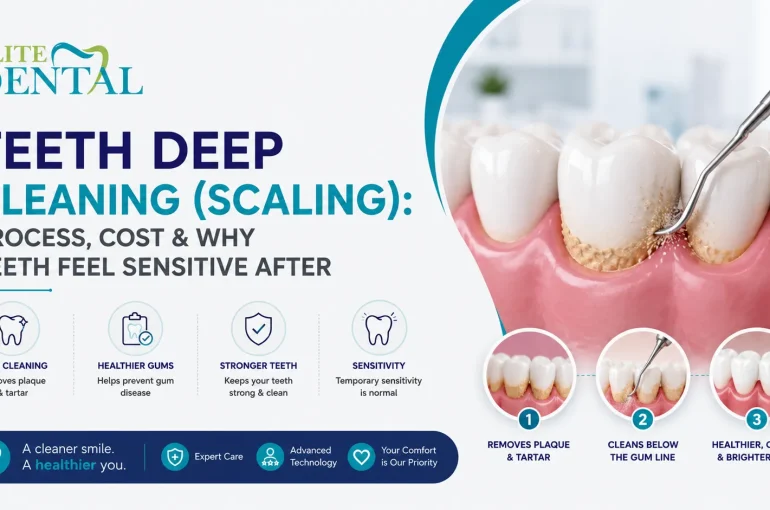
Your dentist has recommended a teeth deep cleaning session and now you are wondering what exactly that involves, whether it will be uncomfortable, why your teeth might feel sensitive afterwards, and what it will cost. These are perfectly valid questions, and you deserve clear answers before sitting in the dental chair.
This guide covers the complete teeth deep cleaning process also called scaling and root planing, the science behind post-procedure sensitivity, the cost factors involved, and how to care for your teeth afterwards for the best results.
Teeth Deep Cleaning: The Difference Between Regular Cleaning and Scaling
Many patients confuse a routine dental cleaning with a teeth deep cleaning. While both involve removing deposits from the teeth, they address very different situations.
A routine cleaning, called prophylaxis, removes surface plaque and mild tartar from above the gumline. It is a preventive procedure recommended every 6 months for patients with healthy gums.
Teeth deep cleaning, on the other hand, goes significantly further. It involves:
- Scaling: Removal of dental plaque and dental calculus (hardened tartar) from both above and below the gumline, including the pockets between the teeth and gums
- Root planing: Smoothing the root surfaces of the teeth to remove bacterial toxins embedded in the root and to help the gum tissue reattach more tightly
A teeth deep cleaning is a therapeutic procedure, it is prescribed when gum disease has already set in, not just as a routine maintenance step.
Dental Plaque and Dental Calculus: The Root Cause
Dental plaque is a sticky, colourless film of bacteria that forms on teeth throughout the day. When not removed through regular brushing and flossing, it hardens within 24 to 72 hours into dental calculus, also called tartar.
Dental calculus cannot be removed with a toothbrush. Once it forms, only a professional dental instrument, an ultrasonic scaler or hand scaler, can remove it safely.
Left untreated, this build-up leads to a cascade of problems:
- Irritation and inflammation of the gum tissue, known as gingivitis
- Progression into periodontitis, infection of the structures supporting the teeth
- Formation of deep gum pockets where bacteria accumulate further
- Gradual bone loss around tooth roots, eventually causing tooth mobility or loss
Teeth deep cleaning directly targets this build-up, removing both dental plaque and dental calculus from areas a regular cleaning cannot reach.
Teeth Deep Cleaning Process: Step by Step
Understanding the teeth’s deep cleaning process takes away the anxiety that often surrounds the procedure. Here is exactly what happens:
Step 1: Clinical Assessment and Probing
The dentist or hygienist begins by using a periodontal probe, a thin measuring instrument, to check the depth of the pockets between your teeth and gums. Healthy pockets measure 1 to 3mm. Pockets deeper than 4mm indicate gum disease and indicate the need for deep cleaning.
Step 2: Local Anaesthesia
Depending on the depth of the pockets and individual sensitivity levels, local anaesthesia is often administered before the procedure. This ensures comfort throughout, especially when cleaning below the gumline.
Step 3: Ultrasonic Scaling
An ultrasonic scaler uses high-frequency vibrations and a water spray to dislodge and remove dental calculus efficiently from tooth surfaces and the edges of gum pockets. This is the primary tool used in the teeth deep cleaning process and is far more thorough than manual scraping alone.
Step 4: Hand Scaling
Fine hand instruments called curettes are used to carefully remove any remaining dental plaque and calculus from root surfaces, particularly in deeper pockets or tight spaces the ultrasonic scaler cannot access fully.
Step 5: Root Planing
The root surfaces are smoothed using the same hand instruments. This removes bacterial toxins embedded in the root cementum and creates a cleaner surface for the gum tissue to reattach to naturally over time.
Step 6: Irrigation and Antimicrobial Rinse
The pockets are flushed with an antimicrobial solution to eliminate remaining bacteria and reduce inflammation. In some cases, an antibiotic gel may be placed directly into deeper pockets.
Step 7: Review and Post-Procedure Guidance
The dentist explains what to expect in terms of sensitivity, prescribes any medication if needed, and schedules a follow-up review, typically 4 to 6 weeks later, to reassess pocket depths and healing.
Teeth Sensitive After Deep Cleaning: The Real Reason
Feeling teeth sensitive after deep cleaning is very common and completely normal. Many patients are caught off guard by it, especially when they were not sensitive before. Here is the explanation:
Before deep cleaning, the roots of your teeth were covered and insulated by dental calculus and inflamed gum tissue. Once the calculus is removed and the gums begin to shrink back to a healthier position, away from the root surface, the roots become temporarily exposed to temperature and pressure.
This exposure causes sensitivity because:
- The root surface does not have enamel, it is covered by cementum, which is a thinner and more porous tissue
- Dentinal tubules in the root are closer to the nerve and respond more readily to hot, cold, and sweet stimuli
- Post-cleaning inflammation takes a few days to subside completely
In most cases, sensitivity after teeth deep cleaning resolves within one to two weeks. Using a desensitising toothpaste, avoiding very hot or cold foods, and rinsing gently with warm salt water all help speed up recovery.
Teeth Deep Cleaning Duration and Number of Sessions
A teeth deep cleaning session typically takes between 45 minutes to 90 minutes. Most dentists divide the mouth into quadrants and treat one or two quadrants per appointment to keep the experience manageable and allow localised healing.
The total number of sessions depends on:
- Severity of gum disease: Mild gingivitis may require only one session; moderate to advanced periodontitis may need 2 to 4 sittings
- Depth of gum pockets: Deeper pockets require more careful and time-consuming root planing
- Amount of calculus present: Heavy build-up accumulated over several years takes longer to remove thoroughly
Teeth Deep Cleaning Cost: Factors That Influence the Price
The cost of teeth deep cleaning in Chandigarh varies from patient to patient. A straightforward estimate requires an in-person assessment. The key factors that shape the cost include:
- Number of quadrants treated: Most clinics price deep cleaning per quadrant, treating more areas in a session increases the cost accordingly
- Severity of gum disease: Advanced periodontitis requiring more sessions and antibiotic therapy adds to the total treatment cost
- Technology used: Clinics with modern ultrasonic scalers and antimicrobial irrigation may price differently from those using only manual instruments
- Diagnostic fees: Detailed periodontal charting and X-rays required before the procedure may be charged separately
- Follow-up sessions: The post-treatment reassessment visit, essential to confirm healing, should be factored into total cost planning
Always ask for a clear, itemised estimate before your teeth deep cleaning begins. A transparent dental clinic will never have hidden charges added after the fact.
Post Deep Cleaning Care: Protecting Your Results
The results of a teeth deep cleaning depend significantly on what you do at home afterwards. The gums need time to heal and reattach and consistent oral hygiene during this period is critical.
- Brush gently twice daily with a soft-bristled toothbrush and fluoride toothpaste
- Use a desensitising toothpaste for the first two weeks if sensitivity is present
- Floss carefully once daily, do not skip this even if gums feel tender
- Rinse with warm saline (salt water) to soothe gum tissue and reduce inflammation
- Avoid smoking, it impairs gum healing and significantly increases the risk of gum disease recurrence
- Attend your 4 to 6 week review appointment so the dentist can assess pocket depths and confirm healing
Teeth Deep Cleaning at Elite Dental Hub, Chandigarh
At Elite Dental Hub in Sector 19A, Chandigarh, teeth deep cleaning is performed using advanced ultrasonic scalers and a carefully sequenced teeth deep cleaning process that prioritises both effectiveness and patient comfort. The team assesses each patient’s gum health thoroughly before recommending the appropriate level of treatment.
Led by Dr. Swati Narang Kaushik, the clinic provides detailed post-cleaning guidance to every patient, covering sensitivity management, home care instructions, and what to expect during the healing period. All instruments used follow the clinic’s four-stage sterilisation protocol for complete safety.
Gums Feeling Sensitive or Swollen? Book a Deep Cleaning Assessment
Do not ignore bleeding gums or persistent bad breath. These are early signs that dental plaque and dental calculus have built up below the gumline. A timely teeth deep cleaning at Elite Dental Hub can reverse early gum disease and protect your teeth for the long term.
Conclusion
Teeth deep cleaning is one of the most effective treatments available for stopping gum disease in its tracks. By removing built-up dental plaque and dental calculus from below the gumline, it gives your gums a genuine chance to heal and reattach.
Sensitivity after teeth deep cleaning is expected, temporary, and manageable. The teeth deep cleaning process itself is well-tolerated under local anaesthesia. And the long-term benefit; healthier gums, fresher breath, and preserved teeth, is far greater than the short-term discomfort involved.
Frequently Asked Questions
1. How often should you get teeth deep cleaned?
Teeth deep cleaning is typically recommended once gum disease is diagnosed. After initial treatment, maintenance deep cleanings are suggested every 3 to 6 months to prevent gum disease from recurring.
2. Is the deep cleaning process painful?
The teeth deep cleaning process is performed under local anaesthesia, so discomfort during the procedure is minimal. Mild tenderness and teeth sensitivity after deep cleaning for a few days is normal and expected.
3. Why are teeth sensitive after deep cleaning?
Teeth sensitive after deep cleaning occurs because removing dental calculus exposes root surfaces that were previously covered. The roots lack enamel and respond to temperature changes until the gums heal and reattach properly.
4. How long does sensitivity last after deep cleaning?
Sensitivity following teeth deep cleaning usually subsides within one to two weeks. Using desensitising toothpaste, warm salt water rinses, and avoiding extreme food temperatures speeds up the recovery significantly.
5. Can dental calculus come back after deep cleaning?
Dental calculus can reform if oral hygiene is not maintained consistently. Regular brushing, flossing, and routine scale-and-polish visits every 6 months help prevent significant build-up from returning after teeth deep cleaning.
6. Is there a difference between scaling and teeth deep cleaning?
Scaling is one part of the teeth deep cleaning process, it removes dental plaque and dental calculus from tooth surfaces. Deep cleaning also includes root planing, which smooths the root to aid gum reattachment and remove bacterial toxins.

