
Fluoride Treatment & Dental Sealants: Easy Cavity Prevention
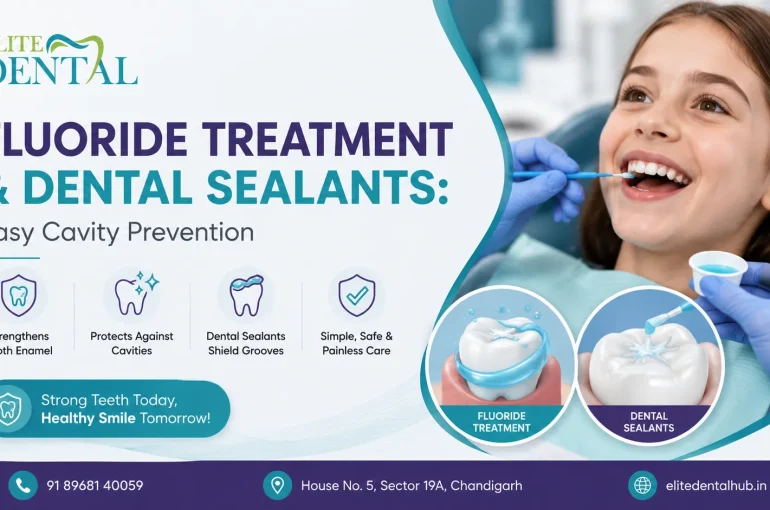
Cavities are one of the most common and most preventable dental problems in both children and adults. Two of the most effective weapons against tooth decay are fluoride treatment and dental sealants. Both are simple, non-invasive procedures that take just minutes and offer protection lasting years. Together, they form the core of smart preventive dental care.
This guide explains how each works, who benefits most from them, and why investing in prevention is always more effective and easier than treating decay after it sets in.
Fluoride Treatment: How It Protects Your Teeth from Decay
Fluoride is a naturally occurring mineral found in water, soil, and certain foods. When applied to teeth, it strengthens tooth enamel; the hard outer layer that protects teeth from bacteria and acid erosion.
Professional fluoride treatment at a dental clinic uses a much higher concentration than what is found in toothpaste or tap water. This makes it significantly more effective at building enamel resistance and reversing early-stage enamel damage before visible decay develops.
How Fluoride Treatment Works
The process is quick, painless, and takes just a few minutes:
- The dentist or hygienist cleans the teeth first to remove surface plaque and debris
- A fluoride gel, varnish, or foam is then applied directly to the tooth surfaces
- The fluoride is left on for a short period, usually 1 to 4 minutes for gel or tray application; varnish may be left on for several hours
- After the procedure, eating and drinking is restricted for at least 30 minutes to allow full absorption
Fluoride varnish, one of the most commonly used forms, is painted directly onto teeth and sets quickly on contact with saliva. It is safe, comfortable, and widely recommended for both children and adults.
Benefits of Professional Fluoride Treatment
- Strengthens enamel: Remineralises areas weakened by acid and bacterial activity
- Reduces sensitivity: Blocks exposed dentinal tubules in sensitive teeth, reducing pain from hot and cold
- Reverses early decay: Catches cavities at the white spot stage before they require drilling
- Safe for all ages: Recommended for children from the first tooth appearance right through adulthood
How Often Is Fluoride Treatment Needed?
The recommended frequency of fluoride treatment depends on your individual risk level:
- Low risk: Once a year is typically sufficient for healthy adults with good oral hygiene
- Moderate to high risk: Every 3 to 6 months for patients prone to cavities, those with dry mouth, gum recession, or a history of frequent decay
- Children: Every 6 months as part of routine dental check-ups is strongly recommended
Dental Sealants: A Physical Barrier Against Tooth Decay
Dental sealants are thin, protective coatings — usually made of plastic resin — applied to the chewing surfaces of the back teeth (molars and premolars). These surfaces have deep grooves and pits that are difficult to clean with a toothbrush alone.
Bacteria and food particles collect in these grooves and lead to decay over time. A tooth sealant seals these grooves shut, creating a smooth surface that is easy to clean and resistant to cavity formation.
The Dental Sealant Application Process
Applying a dental sealant is simple, quick, and completely painless:
- The tooth is thoroughly cleaned and dried
- An acidic solution is applied briefly to roughen the enamel surface, helping the sealant bond better
- The tooth is rinsed and dried again
- The sealant material is painted onto the tooth surface and hardened using a curing light
- The entire process takes just a few minutes per tooth
No drilling, no anaesthesia and no recovery time needed. Your teeth are ready to use immediately after the procedure.
Who Should Get Dental Sealants?
Dental sealants are most commonly recommended for children but adults benefit from them too:
- Children aged 6 to 14: The most important window. First permanent molars appear around age 6, second molars around age 12, sealing them early prevents the most common site of childhood cavities
- Adults with decay-free deep grooves: A tooth sealant can be applied to adult teeth that have no existing fillings and are at risk of decay
- Patients with high cavity risk: Those with a history of frequent decay, limited dexterity for thorough brushing, or dry mouth conditions
How Long Do Dental Sealants Last?
Dental sealants typically last between 5 to 10 years with normal use. Your dentist will check the sealants during routine visits and reapply them if they show signs of chipping or wear.
Fluoride Treatment and Dental Sealants: Stronger Together
Fluoride treatment and dental sealants work in different but complementary ways. Fluoride strengthens enamel across the entire tooth surface. Sealants physically block the grooves in back teeth where decay most commonly begins.
Using both as part of a routine preventive dental care plan provides significantly greater protection than either one alone. Most dental guidelines, including those from the WHO and the Indian Dental Association, recommend both for children at high risk of tooth decay.
The best part? These procedures require no injections, no drilling, and no downtime. They are among the simplest investments you can make in long-term oral health.
Preventive Dental Care at Elite Dental Hub, Chandigarh
At Elite Dental Hub in Sector 19A, Chandigarh, preventive dental care is not an afterthought, it is the foundation of every treatment plan. The clinic offers professional fluoride treatment and dental sealants for patients of all ages, carried out in a calm, clean, and comfortable environment.
Led by Dr Swati Narang Kaushik, the team at Elite Dental Hub believes that preventing a cavity is always better than treating one. During routine check-ups, each patient receives a personalised assessment to determine whether fluoride treatment, dental sealants or both are the right fit, based on their age, dental history, and risk profile.
Prevent Cavities Before They Start — Book a Check-Up Today
Do not wait for a cavity to remind you about dental care. A simple fluoride treatment or dental sealant session at Elite Dental Hub can protect your teeth or your child’s teeth, for years to come. Our team is here to make preventive dental care easy, comfortable, and accessible.
Address: House No. 5, Sector 19A, Opposite HDFC Bank, Chandigarh — 160019
Clinic Hours: Monday to Saturday | 10:30 AM – 7:30 PM
Book Online: Book Your Appointment | Walk-ins welcome
Conclusion
Tooth decay is common, but it is largely avoidable. Fluoride treatment strengthens enamel and helps reverse early damage. Dental sealants shield the most decay-prone surfaces before bacteria can take hold. Together, they are the most reliable, non-invasive tools in preventive dental care available today.
Whether you are looking to protect your child’s permanent teeth or maintain your own oral health, these two procedures offer real, lasting value. Ask your dentist at your next visit, they are simpler than you think, and far more effective than dealing with a cavity later.
Frequently Asked Questions:
At what age should children get fluoride treatment?
Are dental sealants safe for children?
Do dental sealants replace brushing and flossing?
Is fluoride treatment necessary for adults?
How long do dental sealants last?
Can a tooth sealant be applied over an existing cavity?
Search
Categories
Archives
Tags
Recent Posts
- Smile Makeover: What’s Involved & Cost in Chandigarh
- Clear Aligners vs Braces: Cost, Time & How to Choose
- Teeth Whitening at Home vs At the Dentist: What Actually Works?
- Dental Check-Up: What Happens, How Often & Why It Matters
- Teeth Deep Cleaning (Scaling): Process, Cost & Why Teeth Feel Sensitive After

