
Gum Disease: Early Signs, Stages & Treatment Options
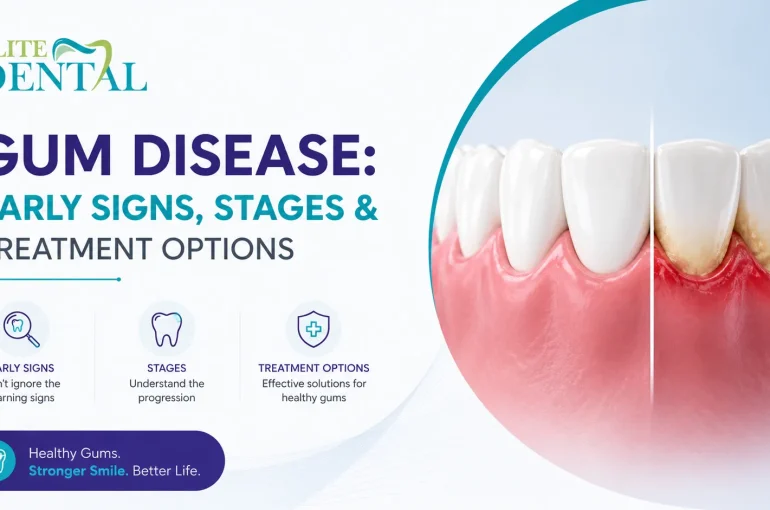
Gum disease is one of the most widespread and most ignored dental conditions in India. The problem is that it rarely hurts in the early stages. By the time most patients notice something is wrong, the damage may already be significant. Consulting a periodontist or gum specialist early is the single most effective step you can take to stop gum disease before it costs you your teeth.
This guide covers everything you need to know, from the very first warning signs to the different stages of gum disease and the treatment options available, including when a deep gum cleaning procedure or advanced periodontics becomes necessary.
Periodontist and Gum Specialist: Understanding Gum Disease
Gum disease, also called periodontal disease, is an infection of the tissues that support your teeth. It begins with bacterial plaque accumulating along the gumline and, if not controlled, progresses into the deeper structures: the periodontal ligament and the jawbone.
A periodontist is a dental specialist with advanced training in the diagnosis, prevention, and treatment of gum disease. A gum specialist evaluates the depth of gum pockets, the condition of the supporting bone, and the extent of infection and then designs a treatment plan accordingly.
The key distinction between a general dentist and a periodontist lies in the depth of training and the complexity of cases they handle. For moderate to severe gum disease, seeing a gum specialist is strongly recommended.
Early Signs of Gum Disease Every Patient Should Recognise
Most people associate gum disease with loose teeth or tooth loss, the end stage. But the disease starts much earlier, with signs that are easy to overlook or dismiss. Here is what to watch for:
- Bleeding gums while brushing or flossing: Often the very first sign. Healthy gums do not bleed during normal brushing. Any bleeding is a red flag worth addressing.
- Red, swollen, or tender gums: Inflamed gum tissue that looks puffy or darker red rather than a healthy pale pink
- Persistent bad breath: Bacterial activity in deep gum pockets releases volatile sulphur compounds, this is the primary cause of chronic bad breath in adults
- Gum recession: Gums appear to be pulling away from the teeth, making teeth look longer than before
- Sensitivity at the gumline: Exposed root surfaces from receding gums are sensitive to hot, cold, and sweet foods
- Pus between the gum and tooth: A clear indicator of active bacterial infection and abscess formation
If any of these signs are present, it is time to consult a gum specialist without delay. Early-stage gum disease is fully reversible with proper treatment.
Gum Disease Stages: From Gingivitis to Advanced Periodontitis
Gum disease progresses through distinct clinical stages. Understanding where you are in that progression helps you understand what treatment is ahead.
Stage 1: Gingivitis
Gingivitis is the earliest and only fully reversible stage of gum disease. It is characterised by inflammation of the gum tissue caused by plaque build-up along the gumline. At this stage, the supporting bone and connective tissue have not yet been affected.
- Signs: Red, swollen gums; bleeding during brushing; occasional bad breath
- Treatment: Professional scaling (periodontal cleaning) and improved home oral hygiene, gingivitis is completely reversible at this stage
- Key point: No bone loss has occurred yet, this is the stage to catch and treat gum disease
Stage 2: Early Periodontitis
When gingivitis is not treated, the infection spreads below the gumline. The bacteria begin to attack the connective tissue and early bone loss starts. Gum pockets deepen to 4–5mm.
- Signs: Increased bleeding, early gum recession, mild bad breath, slight tooth mobility
- Treatment: Scaling and root planing, the deep gum cleaning procedure performed by a gum specialist to remove infection below the gumline
Stage 3: Moderate Periodontitis
At this stage, significant bone loss is visible on X-rays. Gum pockets deepen to 5–7mm. The infection begins to undermine the structural support of the affected teeth.
- Signs: Visible gum recession, sensitivity, pain while chewing, increasing tooth mobility
- Treatment: Periodontal cleaning with root planing, antibiotic therapy, and possibly surgical intervention depending on response
Stage 4: Advanced Periodontitis
Advanced periodontitis involves severe bone loss, often more than 50% of supporting bone, deep pockets (7mm+), significant tooth mobility, and in many cases, tooth loss. This is the stage that requires advanced periodontics intervention.
- Signs: Severely loose teeth, significant gum recession, changes in bite, spontaneous pain
- Treatment: Periodontal surgery, flap surgery, bone grafting, guided tissue regeneration, combined with ongoing maintenance by a periodontist
Periodontal Cleaning and Treatment Options: What a Gum Specialist Offers
Gum disease treatment is matched to the stage and severity of the condition. Here is an overview of the main options a periodontist or gum specialist will consider:
Periodontal Cleaning (Scaling and Root Planing)
Periodontal cleaning, also called scaling and root planing, is the cornerstone of non-surgical gum disease treatment. It involves removing plaque, tartar, and bacterial toxins from above and below the gumline and smoothing the root surfaces to encourage gum reattachment.
- Performed under: Local anaesthesia for comfort during the deep gum cleaning procedure
- Sessions required: Typically 2 to 4 sessions, treating one or two quadrants at a time
- Follow-up: Reassessment at 4 to 6 weeks to evaluate healing and pocket depth reduction
Antibiotic Therapy
Systemic or localised antibiotics are often combined with periodontal cleaning to control the bacterial load, especially in moderate to advanced cases. Antibiotic gels placed directly into deep pockets (e.g., PerioChip, Arestin) provide sustained localised action without systemic side effects.
Periodontal Surgery
When non-surgical treatment does not fully resolve deep pockets or bone defects, a periodontist may recommend surgical intervention. Options under advanced periodontics include:
- Flap surgery (osseous surgery): The gum is folded back to allow direct access to deep root surfaces and bone for thorough cleaning and reshaping
- Bone grafting: Bone lost to periodontitis is replaced with grafting material to regenerate support around the tooth
- Guided tissue regeneration (GTR): A membrane is placed to encourage regrowth of bone and connective tissue in specific defect areas
- Gum grafting: Soft tissue grafts correct significant gum recession and protect exposed roots
Periodontal Maintenance
After active treatment, patients with a history of gum disease require periodontal cleaning every 3 to 4 months, rather than the standard 6-month interval. This maintenance schedule is critical to preventing disease recurrence and preserving treatment results long-term.
Gum Disease Risk Factors: Who Needs a Gum Specialist Most
Certain individuals are at significantly higher risk of developing or progressing gum disease. A gum specialist will assess these factors during consultation:
- Smoking and tobacco use: Tobacco suppresses the immune response and reduces gum blood supply, masking symptoms and accelerating bone loss
- Uncontrolled diabetes: High blood sugar impairs healing and immune response, diabetics have up to 3 times higher risk of periodontitis
- Genetic predisposition: A family history of gum disease increases susceptibility regardless of oral hygiene habits
- Hormonal changes: Pregnancy, menopause, and puberty alter gum tissue response to bacteria
- Medications causing dry mouth: Reduced saliva flow allows bacteria to multiply more rapidly
- Stress: Elevated cortisol impairs the body’s ability to fight infection, including periodontal bacteria
Periodontist and Gum Specialist Care at Elite Dental Hub, Chandigarh
At Elite Dental Hub in Sector 19A, Chandigarh, gum disease is taken seriously from the very first appointment. The clinic provides comprehensive periodontal cleaning, deep gum cleaning procedures, and advanced periodontics treatments under the supervision of experienced dental professionals.
Led by Dr. Swati Narang Kaushik, the team performs thorough periodontal assessments using digital X-rays and periodontal probing at every relevant visit, ensuring gum disease is caught and treated at the right stage. Whether you need a first-time periodontal cleaning or ongoing maintenance as a gum specialist patient, you receive personalised care with complete transparency.
Gums Bleeding or Receding? Book a Gum Health Assessment Today
Do not wait until gum disease reaches an advanced stage. At Elite Dental Hub, our gum specialist team will assess your periodontal health, explain exactly what stage you are at, and recommend the most effective treatment, whether that is a periodontal cleaning or a more comprehensive plan.
Address: House No. 5, Sector 19A, Opposite HDFC Bank, Chandigarh — 160019
Clinic Hours: Monday to Saturday | 10:30 AM – 8:00 PM
Conclusion
Gum disease is silent, progressive, and largely preventable. Catching it at the gingivitis stage means full recovery with a simple periodontal cleaning and improved home care. Letting it progress to advanced periodontics territory means surgery, bone grafts, and in the worst case, tooth loss.
If your gums bleed, your breath persists, or you notice any recession, do not dismiss it. A consultation with a periodontist or gum specialist is the most important step you can take for your long-term dental health. Your gums are the foundation, protect them while you still can.
Frequently Asked Questions:
When should I see a periodontist?
See a periodontist if you have bleeding gums, gum recession, persistent bad breath, loose teeth, or if your general dentist has identified early signs of gum disease during a routine check-up.
Is the deep gum cleaning procedure painful?
The deep gum cleaning procedure is performed under local anaesthesia, so discomfort is minimal during the session. Mild soreness and sensitivity lasting 2 to 5 days after treatment is normal and manageable with prescribed medication.
Can gum disease be reversed?
Gingivitis, the earliest stage, is fully reversible with periodontal cleaning and consistent oral hygiene. Advanced periodontitis with bone loss cannot be fully reversed but can be halted and managed effectively with proper gum specialist care.
How is a gum specialist different from a regular dentist?
A gum specialist or periodontist has completed three additional years of postgraduate training beyond dental school, specialising exclusively in gum disease diagnosis, surgical periodontal treatment, and dental implant placement.
How often is periodontal cleaning needed after treatment?
After active gum disease treatment, periodontal cleaning is recommended every 3 to 4 months. This maintenance schedule, known as supportive periodontal therapy, significantly reduces the risk of disease recurrence.
Does gum disease affect overall health?
Yes. Research consistently links untreated periodontitis to cardiovascular disease, diabetes complications, adverse pregnancy outcomes, and respiratory infections. Consulting a periodontist protects both your oral and systemic health.
Tags:
Search
Categories
Archives
Tags
Recent Posts
- Painless & Single-Sitting Root Canal in Chandigarh
- Sedation & Painless Dentistry: Is It Right for Anxious Patients?
- Missing a Tooth? Implant vs Bridge vs Denture Compared
- Dental Cavity: Causes, Warning Signs & How to Prevent Tooth Decay
- Cosmetic Dentistry in Chandigarh: Options, Costs & What to Expect

