
Wisdom Tooth Removal in Chandigarh: Cost, Recovery & When It Is Needed
Wisdom Tooth Removal in Chandigarh: Cost, Recovery & When It Is Needed
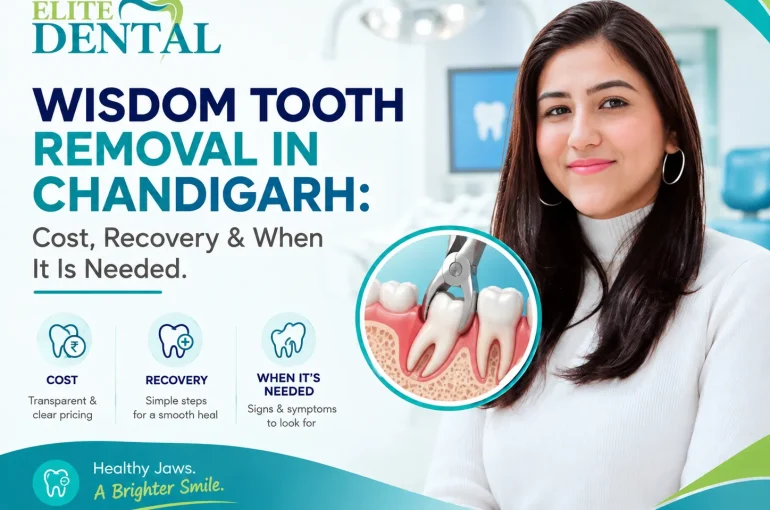
Emerging in late adolescence or early adulthood, third molars often struggle to find adequate space along the dental arch. Scheduling a professional wisdom tooth extraction in Chandigarh becomes essential when these final molars emerge improperly, crowd surrounding dentition, or trigger persistent jaw discomfort. Modern oral surgery ensures that removing troublesome teeth is a straightforward, routine clinical outpatient procedure.
Residents across the Tricity seeking dependable relief often face chronic jaw tightness, swollen gums, or radiating facial headaches. Undergoing a planned wisdom tooth extraction in Chandigarh eliminates harmful bacterial buildup and shields your adjacent healthy molars from root resorption and structural decay. Early clinical intervention at a dedicated dental surgical facility prevents severe dental complications before they disrupt your everyday routine.
Wisdom Tooth Removal in Chandigarh: Clinical Indications
Third molars frequently lack sufficient space to erupt in proper vertical alignment with the rest of your bite. An impacted wisdom tooth occurs when dense jawbone tissue or adjacent teeth block the molar from surfacing completely. This impaction leads to painful soft-tissue flaps called pericoronitis, where food debris and plaque accumulate uncontrollably.
Persistent, throbbing wisdom tooth pain serves as the primary indicator that your third molar requires surgical evaluation. When left unaddressed, misaligned roots place destructive pressure on neighbouring second molars, triggering hidden root cavities and misalignment. Opting for a prompt wisdom tooth extraction in Chandigarh protects your dental arch, relieves localized nerve irritation, and maintains ideal oral hygiene.
Anatomical Classifications of Third Molar Impactions
Every individual displays different jaw anatomy, which influences the surgical approach required for extraction.
- Soft Tissue Impaction: The crown of the tooth has penetrated the jawbone but remains trapped under the gingival tissue, creating an opening prone to swelling and recurrent infection.
- Partial Bony Impaction: The tooth has partially cleared the bone boundary, leaving its surface exposed at an awkward angle while the base remains locked beneath the ridge.
- Complete Horizontal Bony Impaction: The molar lies entirely flat within the jawbone, angled at ninety degrees against the roots of the adjacent tooth, necessitating surgical division into smaller segments.
- Vertical and Angular Impaction: The tooth remains trapped upright or angled severely backward toward the jaw joint, creating persistent sinus or joint tenderness.
The Clinical Step-by-Step Surgical Extraction Procedure
Modern oral surgery utilizes digital diagnostics and local anesthetics to ensure a safe, comfortable, and predictable procedure.
Diagnostic 3D CBCT Imaging and Nerve Mapping
The surgical team begins with full-mouth digital panoramic X-rays or 3D Cone Beam Computed Tomography (CBCT). High-definition radiography reveals the exact root curvature, bone depth, and proximity of the mandibular nerve canal.
Administration of Targeted Anesthesia
The specialist administers gentle local anesthesia to completely numb the treatment zone and adjacent gum tissues. Sedation options are also available for anxious patients to ensure a relaxing, pain-free appointment.
Surgical Access and Sectioning
The oral surgeon makes a clean, minute incision along the gum margin to expose the underlying tooth structure. If dense bone covers the crown, specialized micro-instruments remove a small window of bone. The surgeon gently sections the tooth into smaller parts to enable smooth, trauma-free removal.
Socket Debridement and Suturing
Once the tooth is removed, the extraction socket is cleared of inflammatory tissue and irrigated with sterile saline. Fine, biocompatible dissolvable sutures are placed across the gum margins to support blood clot formation and accelerate tissue healing.
Primary Elements Influencing Wisdom Tooth Removal Cost
Patients planning third molar treatment frequently inquire about financial parameters. The overall wisdom tooth removal cost is determined by several anatomical and procedural factors:
| Clinical Factors | Surgical and Technical Influence |
| Degree of Impaction | Fully erupted teeth require simple elevation, whereas deep horizontal bony impactions involve meticulous bone troughing and tooth sectioning. |
| Anatomical Proximity to Nerves | Teeth situated adjacent to the inferior alveolar nerve require careful 3D CBCT navigation to ensure complete safety during extraction. |
| Type of Anesthesia Administered | Standard local anesthesia, conscious nitrous oxide sedation, or general anesthesia affect clinical monitoring requirements. |
| Number of Teeth Extracted | Removing single symptomatic teeth versus all four third molars in a unified surgical session shapes procedural time and post-surgical care. |
A comprehensive diagnostic assessment allows your surgeon to present an itemized estimate for your wisdom tooth extraction in Chandigarh based on your anatomical requirements.
Proven Recovery Timeline and Aftercare Protocol
A smooth recovery after third molar removal depends on protecting the primary blood clot in the healing socket.
During the first 24 hours, bite gently on the sterile gauze pad provided to encourage firm clot formation. Apply cold ice packs against your cheek in twenty-minute intervals to minimize facial swelling. Eat soft foods like yogurt, pureed soups, and smoothies, and never drink through a straw, spit forcefully, or smoke. Suction can dislodge the blood clot and cause a painful condition called dry socket. After the first day, rinse gently with warm salt water after meals to keep the surgical site fresh and free of bacteria.
Relieve Wisdom Tooth Pain at Elite Dental Hub
Eliminating persistent third molar discomfort demands gentle surgical technique, advanced sterilization, and empathetic patient care. At Elite Dental Hub, our skilled dental specialists utilize modern digital diagnostics to plan precise, minimally invasive extractions. Whether you require treatment for an impacted wisdom tooth or need relief from severe wisdom tooth pain, our clinic ensures a comfortable experience and a rapid return to daily life.
Protect your smile from dental crowding, decay, and chronic discomfort today. Book your assessment at Elite Dental Hub and experience advanced, gentle oral healthcare.
Conclusion
Opting for a timely wisdom tooth extraction in Chandigarh is a proactive step toward protecting your oral health and preserving your natural teeth. Addressing impacted molars early prevents painful gum infections, cyst formation, and irreparable damage to neighbouring roots.
The surgical team at Elite Dental Hub provides precise treatment using modern digital diagnostics and gentle techniques tailored to your comfort. By following recommended recovery protocols and attending follow-up checks, you can look forward to rapid healing, long-term jaw comfort, and lasting oral health.
Frequently Asked Questions:
Is wisdom tooth extraction in Chandigarh a painful procedure?
No, the procedure is carried out under local anesthesia, ensuring you feel only gentle pressure. Any mild postoperative soreness is easily managed with prescribed pain medications.
How many days does recovery take after removing an impacted wisdom tooth?
Most patients return to school or office work within two to three days. Complete soft-tissue and socket healing takes between one and two weeks.
What causes a dry socket after tooth removal?
A dry socket occurs when the protective blood clot is dislodged prematurely by vigorous rinsing, spitting, or using drinking straws, leaving underlying bone exposed.
Can an impacted third molar damage adjacent healthy teeth?
Yes, impacted molars often push against second molars, causing hard-to-reach bacterial plaque traps, deep cavities, and root resorption over time.
Do all four wisdom teeth need to be extracted at the same time?
Not always, though removing all problematic wisdom teeth in a single clinical appointment minimizes overall surgical visits and consolidates your recovery period.
When should I consult a dentist for wisdom tooth pain?
You should see a dentist as soon as you experience tender gums, jaw stiffness, radiating earaches, or bad breath around the back of your mouth.

